

 By
By In today’s hyper-competitive digital marketing environment, attracting traffic to your website is just the first step. The real challenge lies in converting that traffic into engaged leads and paying customers. This is where landing page optimization plays a crucial role.
A well-optimized landing page doesn’t just generate traffic — it converts visitors into action-takers. Whether you’re running paid ads, promoting software, or selling products and services, the landing page is where the magic happens. In this guide, we will dive into the essentials of landing page conversion optimization, offering proven strategies to boost your results in 2026.
What Is Landing Page Conversion?
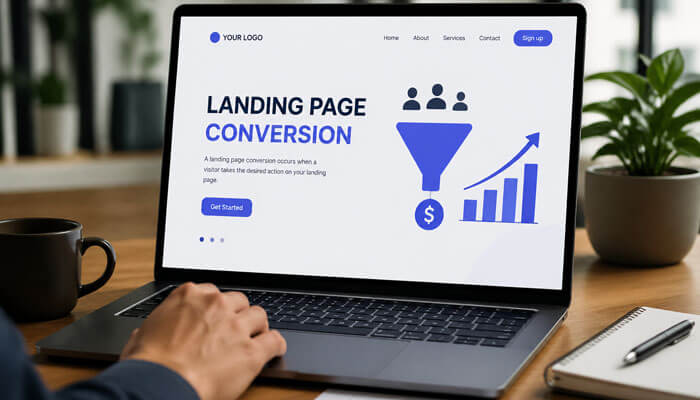
A landing page conversion happens when a visitor to a landing page completes a desired action. This action might include:
- Filling out a form
- Downloading a resource (e.g., eBooks, reports, or whitepapers)
- Starting a free trial
- Requesting a demo
- Making a purchase
Landing pages are different from homepages or general website pages because they are designed with one singular goal in mind: conversion. Every design element, piece of copy, and call-to-action (CTA) should guide visitors toward completing that one goal.
The formula to calculate landing page conversion rate is:
Conversion Rate = (Conversions ÷ Total Visitors) × 100
For instance, if 1,000 people visit your landing page, and 100 of them take the desired action, your conversion rate would be 10%.
Why Landing Page Conversion Matters More in 2026
As we move further into 2026, several factors make landing page conversion even more important than ever before:
1. Rising Paid Acquisition Costs
Acquiring traffic through paid advertising is becoming increasingly expensive. Whether through Google Ads, Facebook Ads, or TikTok, the cost per click (CPC) is on the rise. This means that without effective landing page conversion, you may be wasting money on clicks that don’t turn into tangible results.
2. Sophisticated Audience
In 2026, users are more sophisticated than ever. People are bombarded with digital ads and content daily, and they have higher expectations for personalized and seamless user experiences. A high-converting landing page is essential for meeting these expectations and capturing the attention of potential customers quickly.
3. Privacy Regulations
New privacy regulations, like GDPR and CCPA, are reshaping how marketers collect and track data. As cookies become less reliable, marketers will need to rely more on on-page conversion signals to understand user behavior and refine landing page strategies.
4. Competitive Differentiation
In a crowded digital marketplace, landing page conversion can set your business apart. Companies that create seamless, high-converting landing pages are better positioned to stand out and capture more leads and customers, ultimately gaining a competitive edge in their niche.
In essence, improving landing page conversion means higher ROI from existing traffic, reducing the reliance on paid ads and boosting profitability.
Key Elements of a High-Converting Landing Page
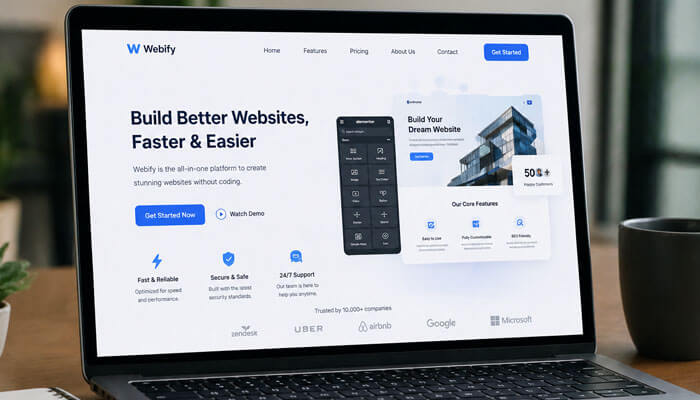
To boost your landing page conversion rates, you need to pay attention to several key components. These elements are designed to minimize friction and guide the user to take action.
1. Clear Value Proposition
A value proposition is the first thing visitors should see on your landing page. It should quickly communicate the benefit of your product or service and explain why visitors should care. The value proposition should be specific and address the visitor’s needs or pain points.
Example:
- “Get 3x More Leads with Our Proven Landing Page Templates”
This tells the visitor what they will gain (more leads) and emphasizes proof and results.
2. Compelling Headline & Subheadline
The headline should capture the visitor’s attention immediately. It should be clear, concise, and align with the user’s intent. The subheadline should provide more context or detail about the offer.
Example:
- Headline: “Increase Your Sales Conversions in Just 30 Days”
- Subheadline: “Our A/B tested landing pages are proven to boost conversion rates for businesses like yours.”
3. Focused Call-to-Action (CTA)
The CTA is arguably the most important part of your landing page. It should be action-oriented, easy to find, and consistent with the page’s goal. Use words that invoke a sense of urgency or desire, such as “Start Free Trial”, “Get Instant Access”, or “Download Now”. Avoid using vague terms like “Submit” or “Click Here”.
4. Social Proof
People are more likely to take action if they feel others have had a positive experience. Social proof — like testimonials, case studies, or user reviews — can reassure visitors that they are making a trustworthy decision.
Example:
- “Trusted by over 10,000 businesses worldwide”
- “See how our solution helped XYZ Corp increase leads by 200%.”
5. Risk Reversal
Offering a money-back guarantee or free trial can reduce perceived risk and increase conversions. It shows visitors that you have confidence in your product and that there’s little downside to trying it.
Proven Strategies for Landing Page Optimization
1. A/B Testing
Testing is the cornerstone of landing page optimization. A/B testing allows you to test different versions of your landing page to see which elements perform best. You can test:
- Headlines
- CTA buttons
- Images
- Form fields
- Overall layout
Through A/B testing, you can continually improve your landing page and optimize for maximum conversion.
2. Mobile Optimization
With more than half of web traffic coming from mobile devices, mobile optimization is critical. Ensure that your landing page:
- Loads quickly on mobile
- Has a responsive design
- Features mobile-friendly CTAs and forms
3. Speed Optimization
A slow-loading landing page can result in a high bounce rate. Aim to load your landing page in under 3 seconds to avoid losing potential leads. Compress images, minimize code, and use caching and CDNs (Content Delivery Networks) to improve page speed.
Conversion Rate Benchmarks for 2026
Benchmark data helps you gauge your performance. While landing page conversion rates can vary significantly by industry, here are some 2026 benchmarks:
| Industry | Average Conversion Rate |
|---|---|
| B2B SaaS | 5–14% |
| E-commerce | 10–25% |
| Lead Gen | 15–35% |
| Webinars | 20–50% |
| Apps | 12–30% |
Top-performing landing pages may exceed these rates, especially when testing, personalization, and optimization strategies are consistently applied.
Common Pitfalls to Avoid
While there are many ways to optimize landing pages, there are also several common mistakes that can hurt conversion rates:
1. Overcomplicating the Design
Simplicity is key. Avoid overwhelming visitors with too many options or excessive text. Focus on a clean design with clear CTAs and a clear message.
2. Weak Call-to-Action
Your CTA should be attention-grabbing and easy to find. Test different phrases, colors, and placements to see what resonates best with your audience.
3. Ignoring Mobile Users
A significant portion of visitors will be browsing on mobile devices. Make sure your landing page is fully optimized for mobile.
Conclusion
Landing page conversion optimization is an essential skill for marketers in 2026. With the right combination of clear value propositions, compelling CTAs, social proof, and effective testing, you can significantly boost your conversion rates. Remember that conversion optimization is a continuous process. Regularly A/B test, review performance, and refine your page elements to achieve the best results. By focusing on these strategies, you’ll get more value from your traffic, reduce your dependency on paid ads, and increase your overall ROI.