


 By
By Taxes are an integral part of modern society. They are the financial backbone that allows governments to function, provide essential services, and build infrastructure that supports economic growth. Yet, despite their importance, many people find taxes confusing or overwhelming. This article breaks down everything you need to know about taxes — what they are, why they exist, the different types, and how tax revenue is used. By the end, you’ll have a clear, well‑researched understanding of how taxes shape both individual financial planning and national economies.
What Are Taxes?
Taxes are mandatory financial charges imposed by government authorities on individuals and businesses. These payments are not optional; they are required by law and collected at various levels—local, regional, and national. The primary purpose of taxes is to generate revenue that funds public goods and services which benefit society as a whole.
In simple terms, taxes are the way people and organizations contribute to the functioning and development of their communities, states, and countries.
Why Do We Pay Taxes?
Most people associate taxes with paying bills, but taxes serve much larger societal and economic roles. The revenue collected through taxes enables governments to:
- Provide Public Services: Education, healthcare, public safety, transportation, sanitation, and more are funded through tax revenue.
- Build and Maintain Infrastructure: Roads, bridges, railways, airports, and ports rely heavily on government funding.
- Redistribute Wealth: Taxes like progressive income tax help balance economic inequality by placing higher rates on higher incomes.
- Stabilize the Economy: Tax policy can influence inflation, employment, and economic growth.
- Protect the Environment: Environmental taxes encourage cleaner practices and fund green initiatives.
Without taxes, governments would lack the resources to perform even the most basic functions that support society and economic activity.
Types of Taxes: A Detailed Breakdown
Taxes come in many forms, each serving a distinct purpose and affecting different areas of the economy. Understanding these types makes it easier to comprehend both personal tax obligations and broader economic policy.
1. Income Tax
Income tax is one of the most widely recognized forms of taxation. It is levied on the earnings of individuals and corporations. The key features of income tax include:
- Progressive Structure: In many countries, individuals with higher incomes pay higher tax rates — designed to ensure fairness.
- Deductions and Credits: Taxpayers can often reduce taxable income through deductions like mortgage interest or tax credits like education incentives.
- Corporate Income Tax: Businesses pay tax on profits after allowable expenses and deductions.
Why it matters: Income tax is a major revenue source for governments and plays a crucial role in wealth redistribution.
2. Sales Tax
Sales tax is applied to the purchase of goods and services. It is generally added to the final price at checkout and collected by retailers on behalf of the government.
Key characteristics:
- Regressive Nature: Since it applies equally to all consumers regardless of income, sales tax can be proportionally higher for lower‑income households.
- Variable Rates: Different regions may apply different rates, and some goods (like essentials) can be exempt.
Where it’s used: Sales tax is common in countries like the United States, where it varies by state and locality.
3. Property Tax
Property tax is levied on real estate property — land, homes, and commercial buildings. The amount owed is typically based on the assessed value of the property.
Important points:
- Local Funding Source: Property taxes often fund local services such as schools, fire protection, and public maintenance.
- Annual Assessment: Properties are revalued periodically to reflect market changes.
Why it matters: Property tax ensures that local governments have consistent funding for community services.
4. Corporate Tax
Corporate tax is imposed on the net profits earned by businesses. Rates vary by country and often include incentives for certain types of investment or economic activities.
Highlights:
- Profit‑Based: Firms pay tax only on profits, not total revenue.
- Global Variation: Some countries use lower corporate tax rates to attract foreign investment.
- Incentives and Loopholes: Tax credits and deductions can reduce the effective rate companies pay.
Importance: Corporate tax influences business decisions, investment strategies, and job creation.
5. Capital Gains Tax
Capital gains tax is applied to profits earned from selling assets like stocks, real estate, or valuable collectibles. It differs from income tax in that it targets investment growth.
- Short‑Term vs Long‑Term: Many systems tax long‑term gains at lower rates to encourage investment.
- Exceptions: Some countries exempt primary residences up to a limit.
Economic impact: Capital gains tax affects investment behavior and wealth accumulation.
6. Excise Tax
Excise taxes are levied on specific goods such as gasoline, tobacco, and alcohol. These taxes are typically included in the price of the product and are not always visible to the consumer.
Examples:
- Fuel Tax: Funds highway construction and maintenance.
- Cigarette Tax: Discourages smoking and funds public health programs.
Purpose: Besides raising revenue, excise taxes often influence consumer behavior.
7. Estate and Inheritance Tax
Estate tax is charged on the transfer of wealth after someone dies. Inheritance tax, meanwhile, is paid by beneficiaries who receive the assets.
- Thresholds: Most systems only tax estates above a certain value.
- Policy Goals: These taxes help prevent the concentration of wealth over generations.
Why it matters: Estate tax affects financial planning and intergenerational wealth transfer.
How Governments Use Tax Revenue
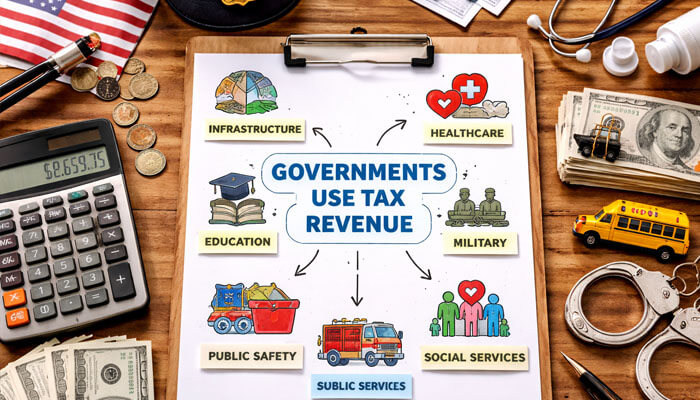
Tax revenue underpins nearly every public function. Below are major areas where tax funds are allocated:
Public Education
Taxes support schools from elementary to higher education, paying for teachers, facilities, and learning resources.
Healthcare Services
Public health systems, insurance programs, hospitals, and vaccination initiatives are funded through taxes, ensuring access to care for citizens.
Infrastructure Development
Roads, bridges, public transit, airports, seaports, and utilities rely on tax dollars for construction and maintenance.
Defense and Public Safety
National defense, police, fire departments, emergency response systems, and disaster relief agencies depend on tax funding to operate effectively.
Social Welfare Programs
Unemployment benefits, food subsidies, housing assistance, and pension systems are vital social safety nets financed by taxes.
Environmental Initiatives
Green projects and environmental regulation enforcement are supported through specific environmental taxes and general revenue.
Tax Policy and the Economy
Taxes don’t just fund services — they are tools of economic policy. Governments adjust tax rates and incentives to influence broader economic outcomes:
- Stimulating Growth: Lower taxes can encourage spending and investment during economic downturns.
- Controlling Inflation: Higher taxes can reduce spending in overheated economies.
- Reducing Inequality: Progressive tax systems aim to balance income distribution.
Smart tax policy balances revenue needs with encouraging productivity and fairness.
Tips for Tax Planning and Compliance
Understanding taxes isn’t only for policymakers — it’s practical for individuals and businesses too.
- Know Your Obligations: Stay current with local, state, and national tax laws.
- Keep Accurate Records: Documentation helps during filing and avoids penalties.
- Use Deductions and Credits: Understand eligible deductions to reduce taxable income legally.
- Plan for Investments: Consider tax implications when buying or selling assets.
- Consult Professionals: Tax advisors can help navigate complex rules and optimize liability.
Final Thoughts
Taxes are fundamental to the functioning of societies and economies. They enable public services, fund infrastructure, support social programs, and influence economic behavior. While tax rules can be complex and vary widely by country and region, understanding the basics — from income tax to excise tax — empowers you to make informed financial decisions and appreciate the role taxes play in community development.
Whether you’re a student, professional, entrepreneur, or policy enthusiast, this comprehensive overview equips you with the knowledge you need to navigate the world of taxes with confidence and clarity.