

 By
By In today’s highly digital world, businesses must go beyond traditional advertising to stay competitive. A digital marketing strategy serves as a roadmap—guiding how you reach your target audience, increase visibility, generate leads, and grow revenue online. Whether you are a small business owner, a marketing professional, or an entrepreneur, understanding effective digital marketing strategies is essential for sustainable success.
This comprehensive guide explores what digital marketing strategy means, why it matters, key components, proven techniques, and actionable steps you can implement today to boost your business online.
What Is a Digital Marketing Strategy?
A digital marketing strategy is a plan that outlines how a business will use online channels to achieve specific goals such as brand awareness, customer acquisition, lead generation, and sales. Instead of sporadic marketing efforts, a strategy focuses on measurable actions, targeted messaging, and data‑driven decisions.
At its core, a digital marketing strategy answers these questions:
- Who is your ideal customer?
- Which digital channels should you use?
- What type of content resonates with your audience?
- How will you measure success?
A successful strategy combines creativity with analytics—balancing engaging content with measurable performance indicators.
Why Every Business Needs a Digital Marketing Strategy
The online landscape is constantly evolving. Customers now research products, compare brands, and engage with businesses primarily through digital platforms. A well-planned strategy enables your business to:
- Reach the right audience at the right time
- Optimize marketing costs by targeting users precisely
- Build brand credibility and authority online
- Track performance with measurable data
- Adapt quickly to changes in market behavior
Without a strategy, your marketing efforts are fragmented—wasting time, money, and resources.
Core Components of an Effective Digital Marketing Strategy
Below are the critical building blocks that every digital marketing strategy should include.
1. Define Clear Marketing Goals
Setting clear, measurable goals is foundational. Goals guide decisions and enable performance tracking. Use the SMART framework—goals should be
- Specific
- Measurable
- Achievable
- Relevant
- Time‑bound
Examples of digital marketing goals:
- Increase organic website traffic by 50% in 6 months
- Generate 100 qualified leads per month
- Boost social media engagement by 30% in 90 days
2. Know Your Target Audience
Understanding your audience transforms generic messaging into highly personalized communication. Develop buyer personas—fictional profiles representing your ideal customers based on:
- Demographics (age, gender, location)
- Interests and behaviors
- Pain points and challenges
- Online platforms they frequent
Audience insights help you tailor content, choose the right channels, and improve engagement rates.
3. Choose the Right Digital Channels
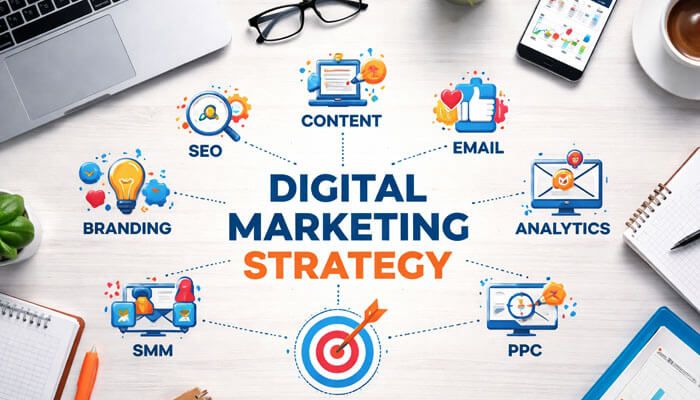
Not all online platforms deliver equal value for every business. Your digital marketing strategy should focus on channels where your audience engages most. Key channels include the following:
Search Engine Optimization (SEO)
SEO improves your visibility in search engine results pages (SERPs). By optimizing your content for relevant keywords, you attract organic traffic from users actively searching for solutions you offer.
Content Marketing
Content is the driving force of digital marketing — articles, videos, podcasts, and infographics educate, inform, and engage your audience. High‑quality content positions your brand as an authority.
Social Media Marketing
Platforms like Facebook, Instagram, LinkedIn, and TikTok help businesses connect with audiences socially and visually. Social media promotes brand awareness and fosters two‑way engagement.
Email Marketing
Email remains one of the highest‑ROI channels. Email campaigns nurture relationships, promote offers, and drive conversions with personalized messaging.
Pay‑Per‑Click (PPC) Advertising
Platforms such as Google Ads and social media ads allow precise targeting. PPC ensures your message reaches users at the right moment based on search intent, interests, or behavior.
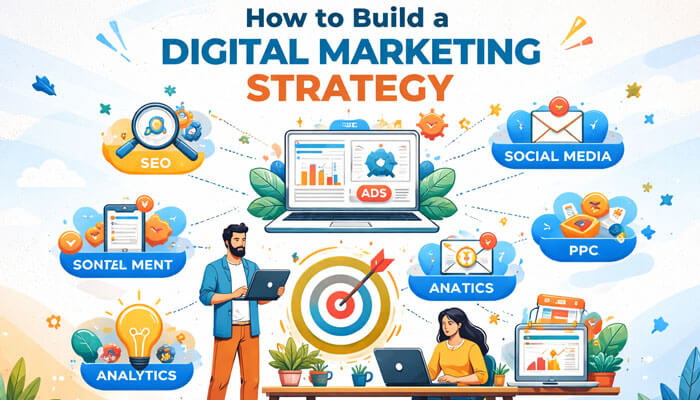
Step‑by‑Step: How to Build a Digital Marketing Strategy
Here’s a proven process you can follow to develop your own strategy:
Step 1: Conduct Market Research
Start with research to understand your industry landscape:
- Analyze competitors’ digital presence
- Identify gaps in existing content
- Evaluate customer preferences and behavior
Tools like Google Analytics, Search Console, and competitive analysis platforms help you gain valuable insights.
Step 2: Perform Keyword Research
Keyword research reveals what your audience is searching for and helps shape your content plan. Identify:
- Primary target keywords
- Long‑tail keywords (low competition, high intent)
- Questions your audience asks online
Use keyword data to optimize content and boost search visibility.
Step 3: Create High‑Quality Content
Content that informs, answers questions, and solves problems builds trust. Prioritize:
- Blog articles optimized for search intent
- Educational videos and tutorials
- Guides, checklists, and eBooks
- Case studies and success stories
Remember: quality content builds organic traffic and authority over time.
Step 4: Promote Your Content Across Platforms
Distribution amplifies visibility. Share and promote your content via:
- Social media
- Email newsletters
- Paid ads
- Guest posting and influencer outreach
Consistent promotion helps expand reach beyond your existing audience.
Step 5: Monitor Performance and Optimize
Digital marketing is iterative. Track KPIs to evaluate performance:
- Website traffic and source breakdown
- Bounce rate and time on page
- Click‑through rates (CTR)
- Conversion rates
- ROI per channel
Use analytics data to refine messaging, improve content, and optimize campaigns for better results.
Best Practices for a Successful Digital Marketing Strategy
To ensure sustainable growth, follow these best practices:
Align marketing activities with business objectives
Create content based on user intent, not just keywords
Maintain consistent branding across all digital channels
Test and experiment with A/B testing
Regularly update older content for freshness
Respond to audience feedback and adjust accordingly
Common Digital Marketing Strategy Mistakes to Avoid
Ignoring analytics and data
Targeting a broad, undefined audience
Skipping market research
Producing low‑quality content
Focusing on tactics without goals
Avoiding these pitfalls improves efficiency and success rates.
Conclusion: Digital Marketing Strategy Is a Growth Engine
A well‑crafted digital marketing strategy transforms how your business connects with customers online. It brings structure, clarity, and direction to your marketing efforts—empowering you to attract more visitors, nurture relationships, and convert prospects into loyal customers.
In 2026 and beyond, digital marketing isn’t optional — it’s essential for growth. Start with clear goals, understand your audience, choose the right platforms, and let data guide your decisions.
With consistency and smart execution, your digital marketing strategy can become your most valuable business asset.