


 By
By In today’s digital age, businesses are shifting from traditional models to digital business models that leverage technology to scale, reduce costs, and improve customer experiences. These models utilize the internet, cloud computing, AI, and data analytics to create new revenue streams and enhance operational efficiency.
From Netflix’s subscription services to Airbnb’s platform-driven ecosystem, digital business models are reshaping industries. For businesses of all sizes, adopting the right model is crucial for staying competitive and unlocking new growth opportunities in a rapidly changing market.
Why Digital Business Models Matter
Digital business models are essential because they:
- Scale rapidly with minimal cost.
- Leverage data to improve customer experience.
- Adapt to change faster than traditional models.
Key Digital Business Models
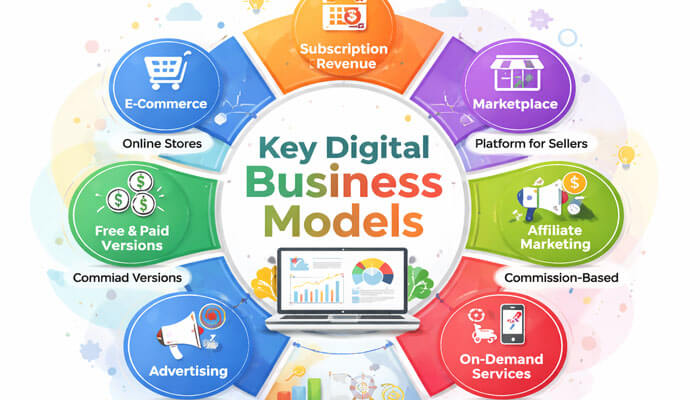
Here’s a brief look at the most successful digital business models in 2026:
1. Platform-Based Business Model
This model connects buyers and sellers, creating ecosystems where both parties benefit from network effects. Popular examples include Airbnb, Uber, and Amazon.
2. Subscription Model
Customers pay recurring fees for continuous access to products or services. Brands like Netflix, Spotify, and Adobe use this model to generate steady, predictable revenue.
3. Freemium Model
In the freemium model, basic services are provided for free, while advanced features come with a cost. LinkedIn, Dropbox, and Slack follow this strategy, converting a percentage of users into paying customers.
4. Data-Driven Business Model
Companies using this model profit by collecting, analyzing, and selling data or using it to improve their products. Google, Facebook, and Netflix are prime examples.
How Digital Business Models Drive Growth
Digital business models are designed to grow quickly and efficiently. By using technology, companies can:
- Reach global audiences without significant physical infrastructure.
- Create personalized experiences for users.
- Leverage automation and AI for operational efficiency.
The Future of Digital Business Models
As we move into 2026, AI, blockchain, and tokenized ecosystems will play a huge role in the evolution of digital business models. Companies are focusing on:
- Hyper-personalization to increase customer loyalty.
- Decentralized finance (DeFi) to change traditional financial services.
Conclusion
Digital business models are not just a trend; they are the future of business. Whether it’s leveraging platforms, subscriptions, or data, companies that adopt these models will thrive. Understanding and implementing the right digital business model can drive growth, improve customer experiences, and scale your business faster than ever before.