


 By
By In the fast-evolving world of business, the ability to understand, adapt, and optimize a company’s business model is paramount to achieving long-term success. Business model analysis is the process of evaluating a company’s key operations, revenue streams, customer engagement, and cost structures to uncover its strengths and weaknesses. This article dives deep into the concept of business model analysis, providing essential frameworks, tools, and real-world examples to help business owners, entrepreneurs, and investors navigate their paths to success.
What is Business Model Analysis?
A business model defines how a company creates value for its customers, delivers that value, and ultimately earns revenue from it. Business model analysis involves a thorough evaluation of all aspects of the model to ensure its effectiveness, sustainability, and scalability in an ever-changing market.
It’s not just about identifying how money flows; it’s about understanding the operational ecosystem that supports the flow of that money and finding ways to make it more efficient and impactful.
At its core, a business model analysis answers three crucial questions:
- How does the business generate value?
- Who are the target customers, and how are they served?
- What are the financial outcomes and sustainability of the business model?
Why is Business Model Analysis Important?
Business model analysis offers businesses a unique opportunity to assess the structure and processes that drive profitability. The insight gained helps not only in evaluating the current state of a business but also in guiding strategic changes. Let’s explore why this analysis is critical:
1. Optimizes Profitability and Efficiency
By examining how value is created and delivered, businesses can identify cost-saving opportunities, eliminate inefficiencies, and streamline operations, ultimately boosting profit margins.
2. Enhances Strategic Decision-Making
Business model analysis provides insights into the overall business strategy, helping leaders make informed decisions based on solid data about market needs, customer behaviors, and competitive positioning.
3. Identifies Opportunities for Growth
Through analysis, businesses can uncover potential areas for expansion, new revenue streams, and strategic partnerships, all of which support growth.
4. Strengthens Competitive Advantage
By benchmarking against competitors, businesses can identify their unique selling propositions (USPs) and explore ways to enhance differentiation in the marketplace.
Core Elements of a Business Model
Every business model consists of several key components that define how it operates and succeeds. To properly analyze a model, you need to break it down into its essential parts:
1. Value Proposition
The value proposition is the core reason why customers choose your product or service over competitors. This component answers questions like:
- What problem is your business solving?
- What makes your product or service unique and better than the competition?
2. Customer Segments
A business must clearly define the customers it aims to serve. These segments may include:
- Demographics: Age, gender, income, location
- Psychographics: Lifestyle, values, preferences
A deep understanding of your customer segments will help tailor marketing and sales efforts to meet their needs effectively.
3. Channels
Channels are the means through which a company delivers its value proposition to its customers. Common channels include:
- Physical stores
- Online platforms
- Sales teams
- Social media
- Partnered retailers
Evaluating channel performance helps ensure cost-effectiveness and customer accessibility.
4. Customer Relationships
The way a company interacts with its customers is crucial. Relationship strategies can range from:
- Personalized service: High-touch support for premium customers
- Self-service: Automated platforms or websites
- Community engagement: Building a loyal customer base through user groups or forums
5. Revenue Streams
This is the lifeblood of any business model. Revenue streams can include:
- Direct sales: One-time purchases
- Recurring revenue: Subscriptions or membership fees
- Freemium models: Basic services offered for free, with paid upgrades
- Licensing or royalties
6. Key Activities
Key activities are the critical tasks a company must perform to deliver its value proposition. These include:
- Manufacturing
- Software development
- Customer service
- Marketing and advertising
7. Key Resources
Resources are the assets a business needs to operate effectively:
- Physical assets: Inventory, machinery, retail spaces
- Human resources: Talent and expertise
- Intellectual property: Patents, trademarks, proprietary technologies
8. Key Partnerships
Many businesses rely on partnerships to deliver their value proposition, reduce risk, or expand their reach. Partnerships can include:
- Suppliers
- Strategic alliances
- Channel partners
9. Cost Structure
Understanding the cost structure helps companies identify where to cut expenses and improve profitability. Costs can be fixed or variable, and they include things like:
- Rent
- Salaries
- Marketing costs
- Technology investments
Frameworks and Tools for Business Model Analysis
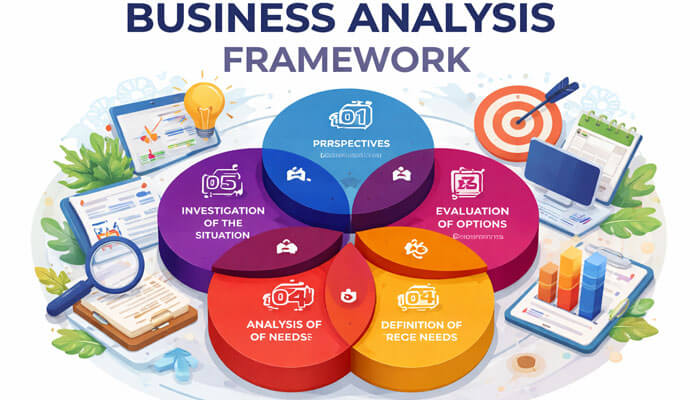
To conduct a thorough business model analysis, several frameworks can be applied. These tools provide structure to your evaluation and ensure that all key components are considered.
1. Business Model Canvas (BMC)
The Business Model Canvas by Alexander Osterwalder is perhaps the most widely used framework for business model analysis. It visualizes the nine key components of a business model in a single chart, making it easier to see how each part interacts and supports the whole system.
2. SWOT Analysis
A SWOT analysis is a powerful tool for evaluating a company’s internal and external factors:
- Strengths: What does the company do well?
- Weaknesses: Where is the company vulnerable?
- Opportunities: What market trends or unmet needs can the company capitalize on?
- Threats: What external factors could hinder growth?
3. Porter’s Value Chain
Porter’s Value Chain Analysis focuses on examining every step in the company’s value creation process, from raw materials to final customer delivery. This framework identifies inefficiencies and areas for improvement within key activities.
4. Balanced Scorecard
The Balanced Scorecard is a strategic planning tool that evaluates performance from four perspectives:
- Financial: Profitability, revenue growth
- Customer: Satisfaction, retention
- Internal Processes: Operational efficiency
- Learning and Growth: Employee development, innovation
Steps for Conducting Business Model Analysis
To carry out a thorough business model analysis, follow this step-by-step process:
1. Understand the Business and Its Objectives
Start by understanding the company’s mission, vision, and goals. Determine whether the analysis is aimed at optimizing an existing business model or designing a new one.
2. Identify Key Components and Gather Data
Use tools like the Business Model Canvas to map out the key components. Gather both qualitative and quantitative data:
- Financial records
- Customer surveys
- Competitive intelligence
3. Evaluate Performance Metrics
Evaluate key performance indicators (KPIs) such as customer acquisition cost (CAC), lifetime value (LTV), revenue growth, and profit margins.
4. Conduct SWOT or Porter’s Value Chain Analysis
Use SWOT or Porter’s Value Chain to assess internal strengths and weaknesses, as well as external opportunities and threats.
5. Explore Future Opportunities
Consider future trends that could disrupt or enhance the business model. For example, advancements in AI or sustainability efforts could offer new ways to deliver value or capture revenue.
Business Model Types and Real-World Examples
Here are several business model archetypes and how they operate in the real world:
| Business Model | Example | Revenue Focus |
| Freemium | LinkedIn, Dropbox | Free users with premium upgrades |
| Subscription | Netflix, Spotify | Recurring monthly fees |
| Direct Sales | Apple, Zara | One-time product purchases |
| Marketplace | eBay, Uber | Commission on transactions |
| Advertising | Google, Facebook | Revenue from ads |
Each model has its own advantages and disadvantages, depending on the company’s goals and market conditions.
Conclusion: The Power of Business Model Analysis
In today’s competitive landscape, business model analysis is not a luxury — it’s a strategic necessity. By understanding and refining how your business operates, delivers value, and generates revenue, you can uncover opportunities for improvement, enhance profitability, and foster long-term growth.
Embrace business model analysis as an ongoing practice. Regular reviews and adjustments based on market shifts, customer feedback, and emerging trends will keep your company ahead of the curve and prepared for whatever challenges come your way.