


 By
By In an era defined by information, Data‑Driven Marketing has evolved from a competitive advantage into a core requirement for sustainable growth. Rather than relying on intuition or guesswork, businesses that harness data insights make smarter decisions, personalize customer experiences, and significantly improve ROI. This article explores the core concepts, strategies, tools, and best practices behind successful data‑driven marketing.
What Is Data‑Driven Marketing?
Data‑Driven Marketing refers to the strategic use of customer data to plan, execute, and optimize marketing efforts. Instead of basing decisions on assumptions, marketers use measurable information — such as behavioral patterns, purchasing history, and interaction data — to tailor campaigns that resonate with target audiences.
At its core, data‑driven marketing answers critical questions:
- Who are my customers?
- When and where are they most likely to engage?
- What motivates their buying decisions?
- How can campaigns be optimized for better performance?
Why Data‑Driven Marketing Matters
1. Enhanced Personalization
Personalization is more than just addressing a customer by name in an email. Data enables marketers to understand behaviors, preferences, and intent — allowing them to deliver content, recommendations, and offers that truly matter to individual users.
2. Improved ROI
By targeting high‑value audiences and optimizing spending, data‑driven strategies reduce waste and improve return on investment. Marketing dollars go where they’re most effective.
3. Clear Performance Measurement
With data analytics, every campaign becomes measurable. Marketers can identify which channels drive engagement, conversions, and revenue — and adjust strategies in real time.
4. Better Customer Experience
Data empowers businesses to meet customers at the right moment with the right message, leading to higher satisfaction and stronger loyalty.
Types of Data Used in Marketing
Understanding data categories is vital:
1. Demographic Data
Demographic data includes age, gender, location, education level, and income. It provides basic but essential insights into audience makeup.
2. Behavioral Data
This comes from user interactions, such as website browsing patterns, time spent on pages, clicks, downloads, and search queries. Behavioral data reveals what audiences are actually doing.
3. Transactional Data
Transactional data includes purchase history, frequency, and order value. This helps identify top customers and predict buying patterns.
4. Engagement Data
Engagement metrics track how users interact with marketing assets — like email opens, video views, comments, and social shares.
How to Build a Data‑Driven Marketing Strategy
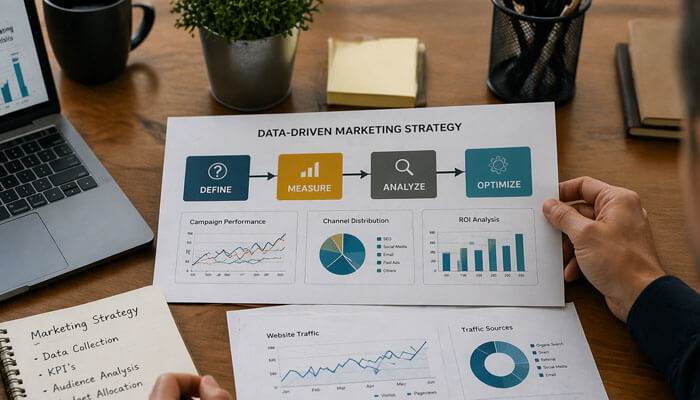
Creating an effective data‑driven strategy involves a clear framework:
1. Define Business Goals
Start by identifying measurable objectives. These could range from boosting lead generation by 30% to increasing customer retention rates by 20%.
2. Collect Relevant Data
Use tools such as web analytics, CRM systems, social listening platforms, and customer surveys to gather data.
3. Segment Your Audience
Group audiences based on shared traits or behaviors — such as frequent buyers, inactive users, or high‑value prospects.
4. Choose Key Metrics (KPIs)
Select performance indicators tied to your goals, such as conversion rate, bounce rate, customer lifetime value (CLV), or cost per acquisition (CPA).
5. Analyze and Interpret Data
Once collected, data should be analyzed with analytics tools such as Google Analytics, BI dashboards, or marketing automation platforms.
6. Optimize and Iterate
Use insights to optimize campaigns and repeat analysis to continually improve outcomes.
Essential Tools for Data‑Driven Marketing
Investing in the right tools can accelerate growth:
| Category | Tool Examples |
|---|---|
| Web Analytics | Google Analytics, Adobe Analytics |
| CRM Platforms | Salesforce, HubSpot CRM |
| Marketing Automation | Mailchimp, Marketo |
| Data Visualization | Tableau, Power BI |
| Customer Data Platforms | Segment, Tealium |
Each tool delivers unique capabilities — whether tracking user behavior, automating campaigns, or producing visual reports for strategic decision‑making.
Challenges in Data‑Driven Marketing
Despite its advantages, data‑driven marketing comes with obstacles:
1. Data Quality and Accuracy
Low‑quality or incomplete data can lead to inaccurate insights and bad decisions.
2. Data Privacy and Compliance
Regulations like GDPR and CCPA require careful handling of customer data and transparent consent practices.
3. Integration Complexity
Many companies struggle with integrating data from multiple platforms into a unified view.
4. Skills Gap
Teams often need expertise in data analytics, interpretation, and technology to succeed.
Best Practices for Success
To maximize impact:
- Regularly clean and update databases.
- Use predictive analytics to forecast trends.
- Implement real‑time tracking and dashboards.
- Educate teams on data literacy.
- Respect customer privacy and comply with regulations.
Future Trends in Data‑Driven Marketing
The landscape continues to evolve:
1. AI and Machine Learning
AI will increasingly predict customer behaviors and automate personalization at scale.
2. Cross‑Platform Attribution
Marketers will adopt advanced models that accurately credit conversions across touchpoints.
3. First‑Party Data Focus
With tighter privacy laws, first‑party data from direct interactions will become more valuable.
Conclusion
Data‑Driven Marketing is not a temporary trend — it’s a transformative approach that enables smarter decisions, stronger customer relationships, and sustainable growth. By collecting the right data, setting clear goals, using advanced analytics tools, and respecting data privacy, businesses can unlock powerful insights that fuel optimized marketing performance.
Data doesn’t just measure success — it drives it.