


 By
By Access to capital is one of the greatest challenges businesses face—especially when they are small, growing, or operating in uncertain markets. Whether you’re a startup looking to scale or an established company seeking funds for expansion, understanding business loans and credit access is fundamental for long‑term success.
In this article, we’ll explore what business loans are, why credit access matters, the types of financing available, how lenders evaluate applications, and practical ways companies can improve their chances of securing funding.
What Are Business Loans?
Business loans are financial products offered by banks, non‑bank lenders, and alternative financing institutions that provide companies with a lump sum or line of credit in exchange for repayment with interest over time.
Business loans directly link to a company’s operations and financial health, unlike personal loans. They can be used for a wide range of purposes, including:
- Working capital
- Purchasing equipment or inventory
- Hiring staff
- Business expansion
- Managing cash‑flow gaps
- Refinancing debt
Why Credit Access Matters
Access to credit determines a business’s ability to grow, innovate, and survive downturns.
1. Fueling Growth
Expanding into new markets, launching products, or scaling production often requires funds that exceed a company’s existing cash reserve. Loans provide a pathway to seize opportunities without diluting ownership.
2. Managing Cash Flow
Every business experiences cyclical cash flow. Loans help cover operating expenses during slow periods, preventing disruptions in payroll, supplier payments, or service delivery.
3. Building Business Credit
Establishing a credit history enhances future borrowing potential. Timely repayment builds business credit scores—making future loans cheaper and easier to secure.
4. Competitive Advantage
Companies with easier access to credit can respond faster to market changes, invest in new technology, and gain an edge over competitors who struggle to secure funding.
Types of Business Loans and Credit
There is no one‑size‑fits‑all when it comes to business financing. Different options suit different needs:
1. Term Loans
A traditional loan where the borrower receives a lump sum and pays it back with interest over a fixed period. These are ideal for long‑term investments like machinery or real estate.
2. Lines of Credit
Unlike term loans, a business line of credit works similarly to a credit card — you borrow what you need up to a limit and pay interest only on the amount used. This is useful for managing working capital.
3. SBA Loans (U.S. Context)
Government‑backed loans (such as those from the U.S. Small Business Administration) provide lower interest rates and longer repayment terms. These are designed to support small business growth but often involve strict eligibility criteria.
4. Invoice Financing
If your business waits 30–90 days for payment from customers, invoice financing lets you borrow against outstanding invoices to access immediate cash flow.
5. Equipment Financing
This type of loan is used specifically to purchase equipment; it often uses the equipment itself as collateral.
6. Merchant Cash Advances
Short-term funding, where repayment comes out of future credit card sales— more expensive than traditional loans and best for businesses with strong daily sales.
How Lenders Evaluate Credit Access
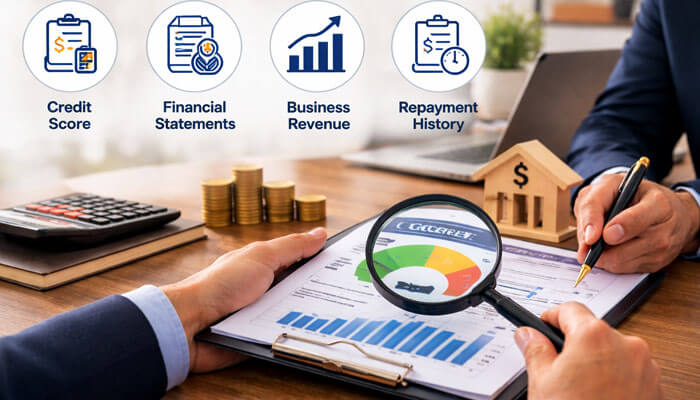
Lenders assess multiple factors before approving a loan:
1. Credit History
Both personal and business credit scores are reviewed. A solid credit history signals repayment reliability.
2. Financial Statements
Profit and loss statements, cash flow analysis, balance sheets, and tax returns help lenders understand business performance.
3. Collateral
Assets that can secure the loan (like property or equipment) reduce risk for lenders and often improve terms.
4. Industry and Market Conditions
Some industries are deemed higher risk (e.g., restaurants vs. established tech firms); this impacts approval and pricing.
Challenges in Credit Access
For many businesses—especially startups and small firms—accessing credit remains difficult due to the following:
- Limited credit history
- Insufficient cash flow
- Unpredictable revenue
- High collateral requirements
- Strict bank lending standards
Alternative lenders have emerged to fill these gaps, but they often charge higher interest rates.
Strategies for Improving Credit Access
If your business is seeking funding, consider these practical steps:
1. Strengthen Financial Records
Maintain clean, up‑to‑date books. Clear financials make underwriting smoother and faster.
2. Build Business Credit
Open business accounts, pay suppliers early, and ensure on‑time payments to improve business credit scores.
3. Consider Collateral
If possible, secure loans with assets to access better terms.
4. Diversify Financing Options
Don’t rely solely on banks. Explore fintech lenders, community development financial institutions (CDFIs), or invoice financing.
5. Improve Cash Flow
Focus on receivables management and expense control — strong cash flow boosts lender confidence.
Conclusion
Business loans and credit access are critical pillars of a company’s financial strategy. Understanding the types of financing available, how lenders assess applications, and ways to strengthen your credit profile can make the difference between stagnation and growth.
Access to capital is not just about borrowing money—it’s about building financial credibility, managing risk, and positioning your business for long‑term success.
If you’d like, we can also provide statistical trends, case studies, or local financing options in India specifically for small businesses. Just let me know!