


 By
By For many entrepreneurs, small business financing is one of the most important yet confusing parts of starting and running a business. Whether you’re launching a startup or expanding an existing company, understanding how financing works can make the difference between success and struggle.
In this guide, we’ll walk you through the essentials of small business financing — what it is, why it matters, available funding options, and tips to secure the best financial support for your business.
What Is Small Business Financing?
Small business financing refers to the money that business owners use to start, run, and grow their operations. This funding can come from a bank, financial institution, investors, or even from the entrepreneur’s personal savings. The main goal of financing is to provide capital so businesses can buy equipment, hire staff, expand locations, launch marketing campaigns, and handle daily operations.
In simple terms — it’s the money that keeps your business moving forward.
Why Small Business Financing Matters
Financing plays a crucial role in business success for several reasons:
1. Helps Get Started
Most businesses need money to launch — whether it’s for inventory, technology, licenses, or workspace rentals.
2. Supports Growth
As your business grows, you might need funds to expand your team, open another branch, or enter new markets.
3. Improves Cash Flow
Having financing helps handle day‑to‑day expenses without cash shortages, especially during slow months.
4. Enables Investment in Assets
Money from financing can be used to buy essential equipment or technology that improves productivity.
Without financing, many small businesses would struggle to survive or scale.
Types of Small Business Financing
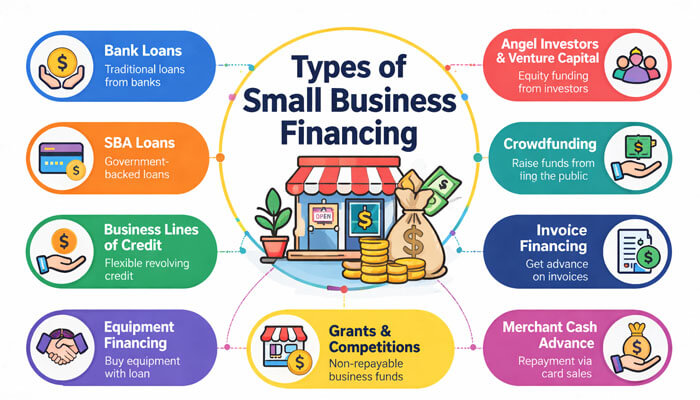
There are many ways to fund a business — each with its own pros and cons. Here’s a breakdown of the most common options:
1. Bank Loans
A traditional business loan from a bank is one of the most popular financing methods.
Pros:
- Typically offers competitive interest rates
- Can provide large loan amounts
- Structured repayment schedules
Cons:
- Requires good credit history
- Lengthy approval process
- Collateral may be needed
2. Small Business Administration (SBA) Loans
In many countries, including the USA, government‑backed programs like SBA loans help small businesses get capital with favorable terms.
Pros:
- Lower interest rates
- Longer repayment terms
- Suitable for new and growing businesses
Cons:
- Complex application process
- Strict eligibility criteria
3. Business Lines of Credit
A line of credit gives your business access to funds when needed — similar to a credit card.
Pros:
- Flexible access to money
- Interest only on what you use
Cons:
- Variable interest rates
- May require strong credit history
4. Business Credit Cards
For many small business owners, credit cards are a quick and easy way to cover short‑term expenses.
Pros:
- Fast approval
- Useful for everyday expenses
- Rewards and cash‑backs
Cons:
- High interest rates if not paid on time
- Can lead to debt if mismanaged
5. Equipment Financing
If you need money to buy tools or equipment, this type of loan lets you borrow specifically for that purpose.
Pros:
- Uses equipment as collateral
- Helps preserve working capital
Cons:
- Limited to specific purchases
6. Angel Investors & Venture Capital
Some business owners raise funds from individual investors or venture capital (VC) firms.
Pros:
- Large amount of funding
- Investors may offer business expertise
Cons:
- You might have to give up equity or ownership
- Investors expect a return on investment
7. Crowdfunding
Platforms like Kickstarter or GoFundMe let you raise money from a large group of people online.
Pros:
- Great for testing business ideas
- Can build community support
Cons:
- Not guaranteed funding
- May require strong marketing
How to Choose the Right Financing Option
Selecting the right type of financing depends on your business goals, finances, and future plans. Ask yourself:
Why do I need the money?
How quickly do I need it?
How much can I afford to repay?
What is my credit situation?
Always compare interest rates, repayment schedules, fees, and lender reputation before deciding.
Tips to Improve Your Chances of Getting Financing
Before applying for financing, here are some practical tips to strengthen your application:
1. Build a Strong Business Plan
A clear plan shows lenders and investors how your business will succeed and repay the loan.
2. Maintain Good Personal and Business Credit
Strong credit improves your chances of approval and earns better interest rates.
3. Keep Accurate Financial Records
Lenders need to see revenue history, expenses, and cash flow to assess risk.
4. Start with Small Loans if Needed
If you’re new to financing, consider smaller or short‑term options first to build credibility.
5. Seek Professional Advice
Accountants or financial advisors can guide you through complex financing decisions.
Common Mistakes to Avoid
Relying too heavily on credit cards
Taking on too much debt without a repayment plan
Not researching lenders and terms
Overlooking alternative financing options
Staying informed and cautious will protect your business from financial stress.
Final Thoughts
Small business financing is not just about getting money — it’s about choosing smart funding options that support growth, improve stability, and protect your long‑term success.
With the right planning, knowledge, and preparation, you can secure financing that helps your business thrive. Remember, the best financing choice is one that aligns with your goals and sets you up for sustainable progress.